
Interview – Samantha Webb
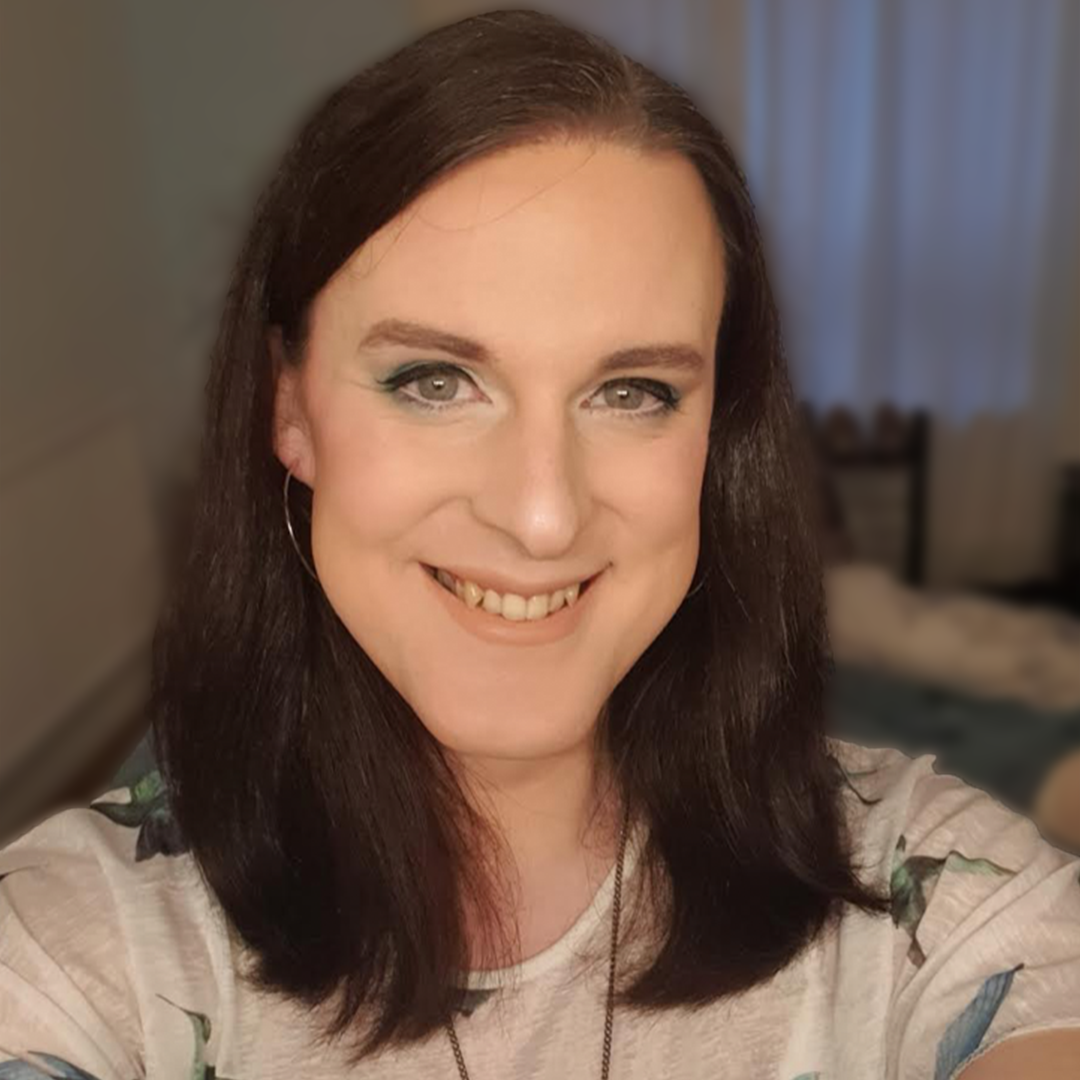
Follow Samantha at:
@/RPGWebby
blackcatsgaming.com
This week we spoke to Head of Product at Modiphius, TTRPG designer and founding member of Black Cats Gaming, Samantha Webb!
We hear about building Black Cats Gaming, some great advice for newer TTRPG designers out there and Samantha's insights on what could be in store for the future of TTRPGs. Samantha is an industry pro with years of experience and we are so excited to bring you this feature.
1. How did you first discover TTRPGs?
I was studying directing at drama college, and wanted to do my dissertation on "interactive performances" - those kinds of shows where you walk around, or become part of the show somehow - and a friend of mine introduced me to live action roleplaying (LARP), and from there we got playing Dungeons and Dragons after hours at college. We really didn't vibe with our first DM though, so I kind of dived in and began DMing for us instead! We played 4th Edition D&D for a while (I know...!) until about two years after graduating I went to the Role Play Haven in London, who introduced me to a whole bunch of other games that weren't D&D.
2. We'd love to hear about Black Cats Gaming. What has the journey been like founding and developing your own TTRPG publishing company?
It's been a grind, but really rewarding! No one really talks about just how much work your own venture is, they always tend to focus on the fun stuff. "Oh, it must be so cool to write your own games and publish them!" when 90% of the work is logistics or customer service, or liaising with artists or printers. Susie, James, and I all run it as our 'side hustle', essentially, and it was born on our commute through London as James and I lamented that we wanted to publish games that were truly ours. I very quietly began working on The Spy Game and we agreed to publish it together. We finished off the game over lock down in 2020, but before that - and since on Cursed Captains of Cthulhu - it's just a lot of evenings and weekends writing, editing, and keeping orders up to date, responding to backers... and you have to find the energy and motivation to do that, week in week out. But, for me, nothing beats the feeling of seeing someone look at your game and get excited, or hearing about how they've played our games and the antics we facilitated!
3. Do you have any advice you'd offer to newer TTRPG designers out there?
Get something to the table as early as possible. You can start playtesting with a lot less than you think - and you should. Playing is the only sure way you can test what you're designing and whether people understand it and find it intuitive. The biggest trap I see people fall into is thinking they have to write the whole game and then test it, or expecting they can just write it perfectly the first time. Works in progress change all the time, and it's a difficult process because your job is to get it wrong often enough that you find the right design solution.
4. How can publishers make sure their games are welcoming to women?
Gaming media has definitely come on leaps and bounds over the last decade, and I think publishers can continue to be welcoming in a number of ways. The easiest is just representing us in art and fiction; it's not that long ago that every guard was by default male, or only certain fantasy races or classes were deemed feminine enough to have female-presenting art. By ensuring the game is a toolkit that allows women to play the diverse array of characters they want to, without restriction, the game itself can be welcoming - and that women have a seat at the design table from the beginning. Publishers should also embrace female and minority-led community leaders and spaces, supporting them in any way they can: gifting, affiliation, sponsorship... In many ways the community itself is the one spearheading more welcoming and accepting spaces, and publishers can and should follow.
5. Having been working in the TTRPG industry for a number of years, how have trends developed in this space since you first started out?
Like video games are seeing at the moment, I think we're in for a surge of popularity for indie publishers and smaller games, and the foundation is already being laid by folks like Tomkin Press, Leyline Press, Grant Howitt, and Rowan, Rook and Decard. While Dungeons and Dragons has and will remain peoples' default game, I think a market for shorter, easier games is opening up bigger than it ever has. If you look at traditional tabletop RPG design and publishing, you have tomes numbering hundreds of pages detailing rules after rules, exceptions and options, and it's overwhelming - but that's how 99% of games used to be. Now, you have games like Eat the Reich or Brindlewood Bay that can get a character going in minutes and the mechanics are so quickly teachable that you can skip the weeks of prep GMs regularly have to do to get a game going, and that fits around busier lifestyles a lot better than combat encounters that take 2 hours...
6. Through your experiences as a GM for great actual plays, what can an actual play show bring to a TTRPG brand?
From a brand's perspective, actual plays take the place of your friend introducing you to a game. So, instead of someone going, "hey we play D&D, want to join us?", streamers are inviting you in to watch their game and by watching you begin to learn the game and get excited for its promise of play. We've seen that with Critical Role, and then to a lesser extent other streamers - including Black Cats - who introduce an audience to a game who otherwise wouldn't have known about it or who didn't have the time or inclination to learn the rules themselves. It's the number one way to convince someone to play your game, and is one of the main things I'd encourage people to use to promote their games.
7. What safety tools do you use at your tables, and what has their inclusion meant to your games?
Session zero is by far the biggest, because it allows you to have an actual conversation with your group and figure out the tone of your game, what themes you want to spotlight and what things you want to avoid. I use spotlights, lines, and veils all the time, as well as the NXO text-chat style X-card (X for hard stop, O? for checking in, O for okay, N for not okay). But those hard stops should really be a last resort, I think everything needs to start with establishing boundaries - including tonal stuff, not just sensitive topics. Some games I've run, I've made "silliness" a line, and you might think "well how are people going to have fun and have a laugh?" But, for me, it's more about not taking the characters and the world seriously. If all you're doing is cracking jokes and making pop culture references, all the time, what's the point of following a quest or having a plot? I get that some groups love that style of play, and it's valid, but it's not for me, so I like to establish that early on, and Session Zeros are pivotal at doing that.
7. What Modiphius projects are you most excited about at the moment?
When I was leading the RPG team a few years ago I was so much more involved in the games themselves, whereas now I more set people a direction or help people solidify their ideas, so it's difficult to say - not only because of that, but because we have so many cool things coming! With Fallout Factions just launched, I'm excited to see how that grows. I've been planning its follow up products, and I can't wait to get them to the table myself. I've been a lapsed wargamer since my teens, but our Fallout miniatures games are finally tempting me back. I'm also in love with Dreams and Machines, an RPG and our own original setting. It's got all the post-apocalyptic things I love while also not being all grey and brown about it - if you know what I mean! It has a lovely juxtaposition of the world living in the shadow of a collapsed sci-fi society while small communities are thriving without the need for Old World technology or morally corrupt philosophies.
8. With the growth of the TTRPG industry in recent years and the increasing crossovers from big name IPs to TTRPGS, and APs to shows and theatre, how can you see our industry developing over the coming years?
I think the biggest growth we're going to see is in recognition. The licensors I'm speaking to still don't quite understand our hobby yet, but I think they'll begin to see its value just like TV executives are beginning to see the artistic value in video games. Tabletop games are the best medium, in my opinion, to more deeply explore a fictional setting. Video games, books, TV - all these mediums are restricted to a single story each, or a tighter narrative structure, but tabletop games allow you to explore the worlds you love for as long as you like. As a segment of their audience, we sell to and speak to an IP's most die-hard, core fans, and as such we can provide the most comprehensive insights into its lore. Some licensors have even said to me, "damn, we need to make your books a must-read for our developers" because of their encyclopedic nature, and also because we're the types of people to make logical assumptions about their fiction (well if X is the case, there must have been Y). I think over the years, big IPs are going to see and use tabletop games as a way to flesh out their worlds and engage with their biggest fans. Not only that, I hope more tabletop IPs are developed for more mainstream mediums; I'd love my dream of a Dreams and Machines crafting/survival video game to come true... if not that, then at least a Netflix series!
Thank you so much to Samantha for sharing her insights and experience. Make sure you give her a follow to stay up to date with upcoming projects and news.